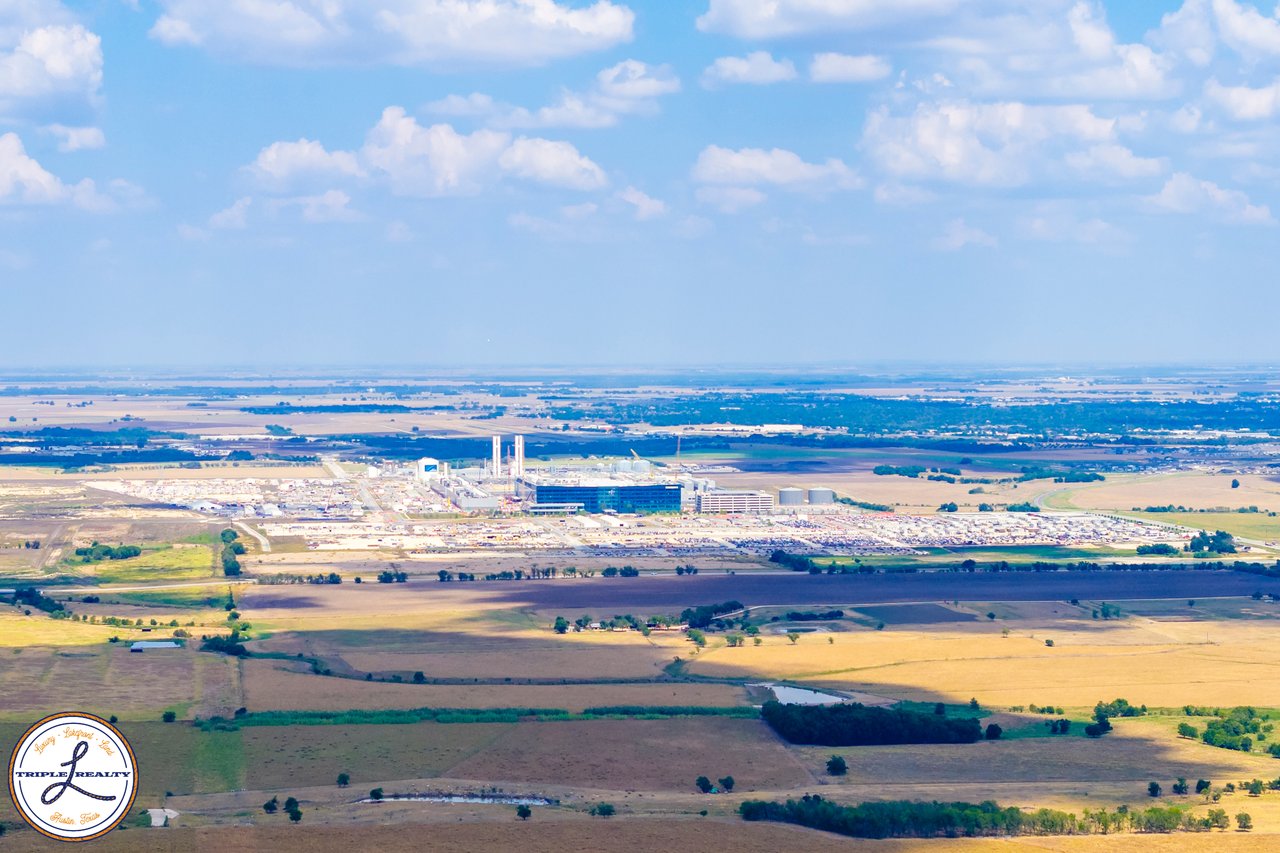
How infrastructure, Samsung’s expansion, and major industrial projects are reshaping land values across Central Texas—and what landowners, developers, and investors need to know now.
The FM 973 and Highway 79 corridors east of Austin have rapidly emerged as one of the most important land development regions in Central Texas.
Stretching through Taylor, Hutto, Manor, Coupland, Thrall, Thorndale, and Rockdale, this corridor is now defined by a convergence of population growth, infrastructure investment, and large-scale industrial development.
For landowners, developers, and investors, this is no longer an emerging market. It is an active expansion zone—where infrastructure, jobs, and capital are aligning in real time.
Central Texas Population Growth Is Driving Land Demand
The Austin metro continues to rank among the fastest-growing regions in the United States, with projections showing millions of new residents over the next two decades.
As affordability tightens in Austin, growth is pushing outward—directly into land markets along FM 973 and Highway 79.
This expansion is increasing demand for:
-
Residential development land
-
Industrial and logistics sites
-
Transitional and mixed-use tracts
Population growth at this scale does not stay centralized—it expands into land.
Samsung and the Rise of the Semiconductor Corridor
A primary driver of this transformation is Samsung Electronics and its $17 billion semiconductor facility in Taylor.
But the bigger story is what surrounds it.
A critical factor shaping land demand is that semiconductor suppliers, vendors, and logistics providers must operate within approximately a one-hour drive of the Samsung facility.
This requirement is actively influencing acquisition decisions across the region.
As a result, developers and industrial users are aggressively targeting land across Taylor, Hutto, Manor, and along the FM 973 and Highway 79 corridors.
This dynamic is accelerating:
-
Industrial and flex-space development
-
Warehouse and distribution site acquisition
-
Workforce housing expansion
In practical terms, the one-hour radius around Samsung is becoming a defined zone of demand, placing upward pressure on land values throughout the corridor.
In addition, the Taylor campus is designed for multi-phase expansion, with additional growth expected over time.
This is how corridors are built—not by one project, but by the ecosystem around it.
Applied Materials Expands the Semiconductor Corridor into Hutto
Another major driver reinforcing long-term growth across the corridor is Applied Materials and its planned campus in Hutto.
Applied Materials—the largest semiconductor equipment manufacturer in the world—is developing a new advanced manufacturing facility designed to support semiconductor production and supply chains across Central Texas.
Key highlights include:
-
Location within the Hutto Megasite area
-
Support for semiconductor fabrication and equipment production
-
Hundreds of high-paying jobs with long-term expansion potential
-
Direct ties to the broader semiconductor ecosystem anchored by Samsung
This project confirms that the corridor is not dependent on a single employer—it is becoming a cluster of semiconductor and advanced manufacturing activity.
And clusters—not single projects—are what drive sustained land value.
Industrial Expansion Is Forming a Regional Network
Large-scale projects across the corridor are reinforcing long-term demand:
-
RCR Taylor Logistics Park — rail-served logistics hub
-
Hutto Megasite — major employer-ready site
-
Advanced Manufacturing and Logistics Campus in Rockdale — redevelopment of the former Alcoa aluminum smelter and mining site
Located in Rockdale, the AMLC spans approximately 3,300 acres and is being developed as a major industrial repositioning project.
Plans include:
-
Up to 50 million square feet of industrial space
-
A 1,200-megawatt power plant
-
Solar and renewable energy infrastructure
What was once a legacy industrial site is now being repositioned as a modern manufacturing and logistics hub—further anchoring the Highway 79 corridor.
Infrastructure Expansion Is Unlocking Land Value
Infrastructure—not speculation—is what drives land value.
Key roadway projects include:
-
FM 973 Expansion — planned three lanes in each direction
-
Samsung Highway (FM 3349 to FM 973) — new four-lane connector
-
CR 401 Extension — improved access to Highway 79
-
CR 404 Improvements — widened lanes and signalized intersections
-
Chandler Road Upgrades — expanded secondary access
-
East Wilco Highway (Southeast Loop) — future regional corridor
These projects are increasing accessibility and expanding the footprint of developable land.
Wastewater and Utilities Are Accelerating Development
While roads create access, utilities create value.
Across Taylor, Hutto, and surrounding areas:
-
Wastewater treatment capacity is expanding
-
Sewer lines are being extended into rural areas
-
Land is transitioning from agricultural to development-ready
Access to wastewater directly impacts density and feasibility—making it one of the most important drivers of land pricing.
Power Infrastructure Supports Long-Term Growth
Industrial growth requires reliable power.
With Samsung’s energy demand and AMLC’s planned 1,200 MW power generation capacity, the corridor is positioned to support:
-
Advanced manufacturing
-
Logistics and distribution
-
Energy-intensive users
This level of capacity reduces development risk and attracts institutional capital.
Housing Demand Is Following Job Growth
Job creation across the corridor is driving housing demand.
Builders are actively acquiring land across Taylor, Hutto, and surrounding areas to meet workforce needs.
This creates a full-cycle growth pattern:
Jobs → Housing → Infrastructure → More demand
What This Means for Landowners
Landowners in this corridor are in a rare position.
As infrastructure expands, land is transitioning into higher-value uses. But maximizing value requires:
-
Understanding development potential
-
Timing infrastructure delivery
-
Positioning land to the right buyers
-
Strategic negotiation
Land does not automatically achieve its highest value—it must be positioned correctly.
What This Means for Developers and Investors
For buyers, this corridor represents one of the most active land acquisition environments in Central Texas.
Success requires:
-
Identifying land in the path of future infrastructure
-
Understanding utility expansion
-
Tracking industrial growth patterns
-
Acting before pricing fully reflects demand
The best opportunities are rarely the most obvious.
Central Texas Land Outlook: 2026–2036
With Samsung, Applied Materials, and the AMLC redevelopment of the former Alcoa site all active within the same corridor, Central Texas is rapidly evolving into one of the most significant semiconductor and advanced manufacturing clusters in the United States.
Over the next decade, expect:
-
Continued population growth
-
Expansion of semiconductor and manufacturing supply chains
-
Residential development acceleration
-
Infrastructure expansion
-
Rising price per acre
This is a structural shift—not a short-term cycle.
About Triple L Realty Group
Triple L Realty Group
Luxury • Lakefront • Land
Build Your Legacy Here
Triple L Realty Group specializes in land brokerage across Central Texas, with a focus on large-acreage, development, and investment properties. The team operates with a clear understanding that land is more than a transaction—it is a long-term asset that builds wealth, shapes lifestyle, and creates legacy.
With deep expertise across development corridors, ranch land, and luxury acreage, properties are evaluated, marketed, and positioned based on their highest and best use—ensuring alignment with the right buyer and the right opportunity.
Josh Smith, Broker, focuses on land, commercial transactions, and development strategy—structuring and negotiating high-value deals that maximize price per acre and long-term return.
Marisa Smith, Realtor®, specializes in luxury acreage, farms, ranches, and equestrian properties, bringing a lifelong connection to the land and a refined understanding of both lifestyle and investment value.
The team works with developers, investors, ranch owners, luxury buyers, and out-of-state clients to:
-
Sell land for maximum price per acre
-
Position properties to attract developers and institutional buyers
-
Identify high-growth land opportunities ahead of the market
-
Source and secure properties that align with each client’s lifestyle and passions—including equestrian estates, livestock operations, hunting land, and waterfront properties
Each property is approached strategically—not simply listed, but positioned to perform in today’s evolving market.
📞 (512) 394-2659
🌐 TripleLRealty.com
Who you work with matters. Choose proven land experts. Build your legacy here.
Frequently Asked Questions
Where is the FM 973 corridor in Texas?
The FM 973 corridor runs northeast of Austin through Manor toward Taylor, connecting key growth areas along Highway 79.
Why is Taylor, Texas growing so fast?
Growth is driven by Samsung, Applied Materials, supplier demand, infrastructure expansion, and proximity to Austin.
What is the AMLC project in Rockdale?
The Advanced Manufacturing and Logistics Campus is a 3,300-acre redevelopment of the former Alcoa site into a major industrial hub.
Why are developers buying land near Highway 79?
The corridor offers infrastructure, industrial growth, and proximity to major employers, making it ideal for long-term development.
How does wastewater affect land value?
Access to wastewater allows higher-density development, significantly increasing land value.
How close do suppliers need to be to Samsung Taylor?
Most suppliers aim to be within approximately one hour, driving strong demand across the region.
People Also Search For
Central Texas land for sale
Taylor Texas development land
Hutto Texas commercial land
FM 973 corridor growth
Highway 79 Texas development
Samsung Taylor suppliers land demand
Williamson County land investment
Texas land investment opportunities
Industrial land near Austin Texas
Land development trends Central Texas
Final Thoughts
The FM 973 and Highway 79 corridors are no longer secondary markets—they are central to the next phase of Central Texas growth.
For landowners, developers, and investors, the opportunity lies in understanding not just where the market is today—but where it is going next.